



Asbestos Regulations Explained for Durham Businesses
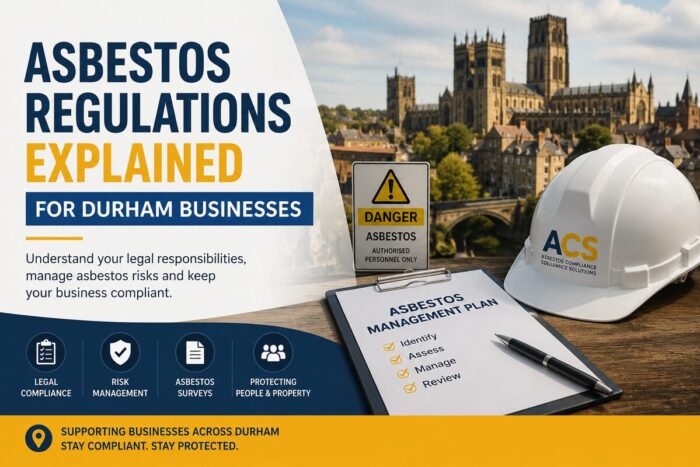
If you own, manage, or occupy commercial premises in Durham, understanding your responsibilities under UK asbestos legislation is essential. Many commercial buildings constructed before 2000 may still contain asbestos-containing materials, and dutyholders may have legal duties to identify, assess and manage any associated risks.
Understanding asbestos regulations for Durham businesses is not simply about compliance. It is about protecting employees, contractors, visitors, and anyone who may come into contact with asbestos-containing materials during the normal use of a building.
This guide explains what businesses need to know about asbestos regulations, who is responsible, and how compliance can be achieved.
What Are the Current Asbestos Regulations for Businesses?
The primary legislation governing asbestos management in the UK is the Control of Asbestos Regulations 2012.
These regulations place a legal duty on those responsible for non-domestic premises to identify and manage asbestos risks.
For many organisations, understanding asbestos regulations for Durham businesses begins with recognising that asbestos management is an ongoing responsibility rather than a one-time exercise.
The regulations apply to:
- Offices
- Warehouses
- Factories
- Retail units
- Schools
- Healthcare facilities
- Industrial premises
- Public buildings
- Mixed-use commercial properties
- Common parts of multi-occupancy domestic premises
If your building was constructed before 2000, asbestos may still be present within the property. Understanding Asbestos Regulations for Durham Business owners is an important step towards identifying potential risks and ensuring your premises remain compliant with current UK legislation.
Who Is Responsible for Asbestos Management?
One of the most common questions businesses ask is:
Who is responsible for asbestos compliance?
The responsibility typically falls to the dutyholder.
The dutyholder may be:
- The building owner
- A landlord
- A tenant with maintenance responsibilities
- A facilities management company
- A managing agent
The exact responsibility will depend on lease agreements and maintenance obligations.
For organisations seeking to comply with asbestos regulations for Durham businesses, identifying the dutyholder is the first step towards effective asbestos management.
What Does the Duty to Manage Mean?
The duty to manage asbestos requires dutyholders to take reasonable steps to identify and control asbestos risks.
This generally includes:
- Identifying asbestos-containing materials, or presuming asbestos is present where appropriate
- Assessing their condition
- Maintaining an asbestos register
- Conducting risk assessments
- Preparing an asbestos management plan
- Reviewing asbestos information regularly
- Providing asbestos information to anyone liable to disturb ACMs, including maintenance teams, contractors and other relevant parties
The purpose is to prevent accidental disturbance and minimise the risk of exposure.
Does Every Commercial Property Need an Asbestos Survey?
Not automatically, but if suitable asbestos information is not already available, a management asbestos survey is usually required to support compliance with Regulation 4.
An asbestos survey can help identify:
- The location of asbestos-containing materials
- Material types
- Condition assessments
- Potential disturbance risks
- Areas requiring monitoring
A professional survey provides the information needed to support compliance with asbestos regulations for Durham businesses.
Many businesses also arrange additional surveys before refurbishment or demolition projects.
What Is an Asbestos Register?
An asbestos register is a document that records known or presumed asbestos-containing materials within a building.
The register typically includes:
- Material location
- Product type
- Material condition
- Risk assessments
- Inspection history
One of the most overlooked aspects of asbestos regulations for Durham businesses is ensuring asbestos registers remain up to date.
An outdated register may create risks for maintenance staff and contractors working within the premises.
What Is an Asbestos Management Plan?
Another question frequently asked by business owners is:
What is an asbestos management plan?
An asbestos management plan explains how asbestos risks will be monitored and controlled.
A typical management plan may include:
- Inspection schedules
- Risk assessment procedures
- Staff awareness arrangements
- Contractor communication procedures
- Emergency response actions
- Re-inspection
Businesses should review their management plans regularly to ensure they remain accurate and effective.
Regular reviews are a key part of effective asbestos management. Over time, the condition of asbestos-containing materials can change due to building use, maintenance work, or natural deterioration. To learn more about recommended inspection intervals, read our guide on Asbestos Re-Inspection Frequency under the Control of Asbestos Regulations 2012.
What Happens During Refurbishment or Renovation Work?
Many asbestos incidents occur during refurbishment projects.
Activities such as:
- Installing new services
- Removing walls
- Replacing ceilings
- Altering layouts
- Upgrading heating systems
can disturb hidden asbestos-containing materials.
Do businesses need an asbestos survey before renovation?
Where refurbishment or demolition work may disturb the building fabric, a refurbishment and demolition survey will usually be required before intrusive work begins.
Failing to identify asbestos before refurbishment can result in:
- Project delays
- Unexpected costs
- Contractor exposure
- Emergency remediation work
- Regulatory investigations
Understanding these requirements is an important part of complying with asbestos regulations for Durham businesses.
What Are the Penalties for Non-Compliance?
Businesses that fail to manage asbestos appropriately may face serious consequences.
Potential penalties can include:
- HSE enforcement notices
- Prosecution
- Unlimited fines
- Project shutdowns
- Reputational damage
The HSE describes asbestos as the greatest cause of work-related deaths in Great Britain, with around 5,000 deaths each year from asbestos-related diseases.
For this reason, businesses should never assume asbestos compliance can be ignored or postponed.
How Often Should Asbestos Be Re-Inspected?
This is another common question for business owners and property managers.
How often should asbestos be checked?
There is no single timeframe that applies to every building.
Inspection frequency depends on:
- Material condition
- Building usage
- Occupancy levels
- Previous survey findings
- Potential disturbance risks
However, asbestos-containing materials should be reviewed regularly as part of an ongoing asbestos management programme. Many organisations use annual re-inspections as a baseline, with shorter intervals where materials are damaged, higher-risk, frequently accessed, or more likely to be disturbed.
Maintaining regular inspections helps businesses remain compliant with asbestos regulations for Durham businesses.
Which Durham Businesses Should Be Most Concerned?
Any commercial property built before 2000 may contain asbestos.
Businesses operating in:
- Durham City
- Chester-le-Street
- Consett
- Stanley
- Seaham
- Bishop Auckland
- Newton Aycliffe
- Spennymoor
- Peterlee
- Barnard Castle
should ensure asbestos risks are properly assessed and managed where appropriate.
This applies to property owners, landlords, employers, retailers, manufacturers, schools, healthcare providers and anyone responsible for maintaining non-domestic premises or common parts of multi-occupancy domestic buildings.
How Can Businesses Stay Compliant?
The most effective approach to compliance involves:
- Arranging an asbestos survey where suitable asbestos information is not already available.
- Maintaining an up-to-date asbestos register.
- Implementing an asbestos management plan.
- Conducting regular re-inspections.
- Providing information to contractors and maintenance teams.
- Reviewing asbestos records regularly.
Businesses that follow these steps are typically better positioned to manage risks and meet their legal obligations. Following Asbestos Regulations for Durham Business owners also demonstrates a proactive approach to protecting employees, contractors, visitors, and anyone who may access your commercial premises.
Conclusion
Understanding asbestos regulations for Durham businesses is essential for protecting people, maintaining compliance, and reducing the risk of costly disruptions.
Whether you own an office, warehouse, retail unit, school, healthcare facility, or industrial premises, asbestos management should form part of your wider health and safety strategy. Proper surveys, accurate records, regular inspections, and effective management plans all play a vital role in controlling asbestos risks.
At Asbestos Compliance Solutions (ACS), we support businesses throughout Durham and the wider North East with professional asbestos surveys, asbestos testing, asbestos management plans, asbestos re-inspection surveys, and asbestos removal support, including licensed and non-licensed removal services where required. Our experienced team can help your organisation understand its responsibilities and implement practical asbestos management solutions.
If your business requires professional asbestos support, contact ACS today to discuss your requirements and arrange expert guidance from our experienced team.
Frequently Asked Questions
Yes. Businesses responsible for non-domestic premises should comply with Asbestos Regulations for Durham Business by identifying asbestos-containing materials, assessing risks, and implementing suitable management measures in line with the Control of Asbestos Regulations 2012.
The duty to manage requires dutyholders to identify, or presume the presence of, asbestos-containing materials and implement suitable management measures.
No. However, buildings constructed before 2000 are more likely to contain asbestos-containing materials.
Work may need to stop until the material is assessed and appropriate action is taken.
Under Asbestos Regulations for Durham Business, asbestos-containing materials should be reviewed regularly as part of an asbestos management plan. Inspection frequency depends on the condition of the material, previous survey findings, occupancy levels, and the likelihood of disturbance.