




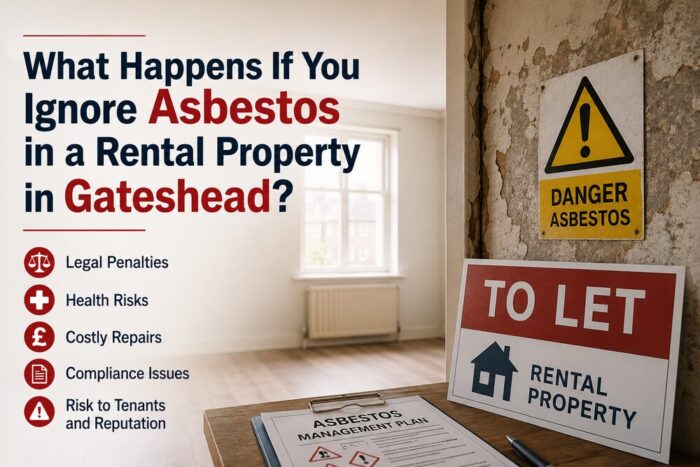
What Happens If You Ignore Asbestos in a Rental Property in Gateshead?
Asbestos remains a common issue in many older rental properties across Gateshead. Although the use of asbestos was banned in the UK in 1999, asbestos-containing materials can still be found in buildings constructed or refurbished before 2000. For landlords, understanding the risks associated with asbestos in rental properties in Gateshead is essential for protecting tenants, maintaining property standards, and avoiding potential legal complications.
Ignoring asbestos does not make the problem disappear. In some cases, asbestos can remain safely in place if it is properly managed and remains in good condition. However, failing to identify or manage asbestos appropriately can lead to health risks, costly refurbishment delays, and compliance issues.
This guide explains what can happen if asbestos is ignored and what landlords in Gateshead should do to manage their responsibilities effectively.
Why Is Asbestos Still Found in Rental Properties?
Asbestos was widely used in residential construction because of its fire-resistant and insulating properties. As a result, many rental properties built before 2000 may still contain asbestos-containing materials.
Common locations include:
- Garage roofs
- Textured ceiling coatings
- Floor tiles and adhesives
- Pipe lagging
- Asbestos insulation boards
- Soffits and gutters
- Service cupboards
- Boiler rooms
The presence of asbestos does not automatically make a property dangerous. Problems typically arise when materials become damaged, deteriorate over time, or are disturbed during maintenance and renovation work.
For landlords managing asbestos in rental properties in Gateshead, understanding where asbestos may be present is often the first step towards effective risk management.
What Are a Landlord’s Responsibilities?
One of the biggest misconceptions is that landlords have no responsibilities regarding asbestos in residential properties.
While legal duties vary depending on the type of property, landlords still have a responsibility to ensure rented accommodation is safe, properly maintained, and suitable for occupation.
Landlords should consider:
- Identifying potential asbestos-containing materials
- Arranging asbestos surveys where appropriate
- Keeping records of known asbestos materials
- Informing contractors before maintenance work begins
- Monitoring the condition of asbestos-containing materials
- Taking action where materials become damaged or are likely to be disturbed
Where communal areas are involved, such as stairwells, corridors, service cupboards, plant rooms, shared loft spaces, and shared facilities, landlords or managing agents will usually have additional responsibilities under the Control of Asbestos Regulations 2012, depending on who has control of maintenance and repair.
Understanding how to manage asbestos in Gateshead rental properties can help landlords reduce risks and make informed decisions about future maintenance and refurbishment work.
Health Risks of Ignoring Asbestos
One of the most serious consequences of ignoring asbestos is the potential impact on health.
When asbestos-containing materials are disturbed, microscopic fibres can be released into the air. These fibres may then be inhaled by occupants, contractors, or maintenance workers.
Exposure to asbestos fibres has been linked to several serious illnesses, including:
Mesothelioma
A cancer affecting the lining of the lungs or abdomen that is strongly associated with asbestos exposure.
Asbestosis
A chronic lung condition caused by inhaling asbestos fibres over a prolonged period.
Lung Cancer
Long-term asbestos exposure can increase the risk of lung cancer, particularly among smokers.
Pleural Thickening
A condition affecting the lining of the lungs which can cause breathing difficulties and reduced lung function.
Many asbestos-related diseases can take decades to develop, making prevention and early identification particularly important.
For this reason, landlords dealing with asbestos in rental properties in Gateshead should take a proactive approach to asbestos management.
What Happens During Property Maintenance and Renovation?
Many asbestos-related issues are discovered during maintenance and refurbishment projects.
A contractor may begin work only to uncover asbestos behind walls, under flooring, within ceiling voids, or around pipework.
If asbestos is discovered unexpectedly, work may need to stop immediately while the material is assessed.
This can result in:
- Project delays
- Increased refurbishment costs
- Additional survey requirements
- Contractor downtime
- Unexpected asbestos removal costs
These situations are often avoidable through appropriate asbestos surveys before work begins.
Landlords planning refurbishment, renovation, or significant maintenance work to rental properties in Gateshead should consider whether suitable asbestos survey information is needed before intrusive work begins.
Could Ignoring Asbestos Lead to Legal Problems?
Potentially, yes.
Although every situation is different, landlords have a duty to provide safe accommodation and take reasonable steps to address known hazards.
If asbestos risks are ignored and exposure occurs, landlords could face:
- Tenant complaints
- Property disputes
- Insurance complications
- Enforcement action
- Reputational damage
Professional asbestos management demonstrates that reasonable steps have been taken to identify and control potential risks.
This can be particularly important where contractors or maintenance workers may come into contact with asbestos-containing materials.
The Importance of Asbestos Surveys
One of the most effective ways to manage asbestos risks is through a professional asbestos survey.
An asbestos survey can help identify:
- The location of asbestos-containing materials
- The type of material present
- Its condition
- Potential exposure risks
- Whether management or removal is recommended
For landlords managing asbestos in rental properties in Gateshead, surveys provide valuable information that can support maintenance planning and risk management decisions.
Survey findings can also help contractors work safely and avoid disturbing asbestos during repairs or refurbishment projects.
Does Asbestos Always Need to Be Removed?
No.
One of the most common misconceptions is that asbestos must always be removed as soon as it is discovered.
In reality, many asbestos-containing materials can remain in place safely if they are:
- In good condition
- Properly monitored
- Unlikely to be disturbed
In some situations, ongoing asbestos management may be the most practical and cost-effective solution.
However, removal may be recommended where asbestos is:
- Damaged
- Deteriorating
- Located in vulnerable areas
- Likely to be disturbed during future works
A professional assessment can help determine the most appropriate course of action.
Supporting Landlords Across Gateshead
Gateshead contains a wide variety of residential properties, including older terraced housing, flats, converted buildings, and modern developments.
Many older properties across areas such as:
- Low Fell
- Felling
- Whickham
- Birtley
- Blaydon
- Ryton
- Dunston
- Lobley Hill
- Teams
- Gateshead Town Centre
may still contain asbestos-containing materials.
As a result, awareness of asbestos in rental properties Gateshead remains important for landlords seeking to protect both tenants and property investments.
Protecting Your Property and Tenants
Ignoring asbestos can lead to health concerns, project delays, compliance issues, and increased maintenance costs.
The good news is that asbestos risks can often be managed effectively through early identification, professional surveys, and ongoing monitoring.
If you own or manage rental accommodation, understanding the risks associated with asbestos in rental properties in Gateshead can help you make informed decisions and reduce potential liabilities.
Professional asbestos surveys, asbestos sampling and testing, asbestos management plans, and asbestos removal services can all play an important role in protecting tenants, contractors, and property owners while helping ensure compliance with current UK regulations.
Conclusion
Ignoring asbestos in a rental property can create unnecessary risks for landlords, tenants, contractors, and property managers. While asbestos-containing materials do not always require removal, they should never be ignored. Identifying asbestos early and understanding its condition can help prevent health concerns, avoid costly project delays, and support compliance with current regulations.
For landlords managing older properties in Gateshead, professional asbestos surveys and risk assessments can provide clarity and help determine whether asbestos can be safely managed or whether further action is required.
At Asbestos Compliance Solutions (ACS), we support landlords, homeowners, businesses, and property managers throughout Gateshead with professional asbestos surveys, asbestos sampling and testing, asbestos management plans, and asbestos removal services. Our experienced team can help identify asbestos-containing materials, assess risks, and provide practical advice tailored to your property.
If you are concerned about asbestos in a rental property in Gateshead, contact ACS today to discuss your requirements and arrange professional asbestos support.
Frequently Asked Questions
Not necessarily. However, surveys are often recommended for older properties, particularly before refurbishment, renovation, or major maintenance work.
Asbestos-containing materials that remain in good condition and are not disturbed generally present a lower risk. Problems arise when fibres become airborne.
Avoid disturbing the material and seek professional advice. An asbestos survey can help determine whether asbestos is present and what action may be required.
Potentially, yes. Exposure may occur if asbestos-containing materials become damaged or are disturbed during maintenance or refurbishment work.
No. Depending on its condition and location, asbestos may often be safely managed rather than removed. A professional assessment can determine the most appropriate approach.